How to Identify Genuine Watch Parts Before You Buy
The market for vintage and replacement watch components is full of replicas and aftermarket copies. Here's how to tell the real ones from the fakes — before you spend your money.
If you buy watch parts online, you already know: there are genuine parts, aftermarket alternatives, and outright fakes. Telling them apart isn't always straightforward — especially when you're dealing with deadstock, NOS, or second-hand components that left their original packaging decades ago.
We won't pretend there's a magic formula. But after handling thousands of parts across 79 brands, here's what we actually look at when sourcing inventory for ChronoShop.
Forget the "Weight Test" — Focus on What You Can See
You'll read elsewhere that you should weigh a part and compare it to specifications. In practice, this is nearly useless. Who keeps a reference database of what every Rolex bracelet link weighs? And even if you did — a bracelet missing two links weighs less than a complete one. That doesn't make it fake.
What actually works is looking. Get a loupe — even a 10x is enough — and examine the part closely. Here's what to look for:
1. Engravings and Markings
Genuine watch parts have precise, clean engravings. On cases, look between the lugs for the reference number and serial number. On movements, look for the caliber number stamped on the main plate. On dials, the printing should be crisp and perfectly aligned — no bleeding, no uneven letter spacing.
Aftermarket dials are the most common fakes in the market. Under a loupe, the text quality tells the story immediately. Genuine Swiss dials have printing that's razor-sharp. Replicas almost always have slight imperfections — thicker strokes, inconsistent spacing, or a slightly wrong font weight. Once you've seen the difference, you can't unsee it.
2. Finishing Quality
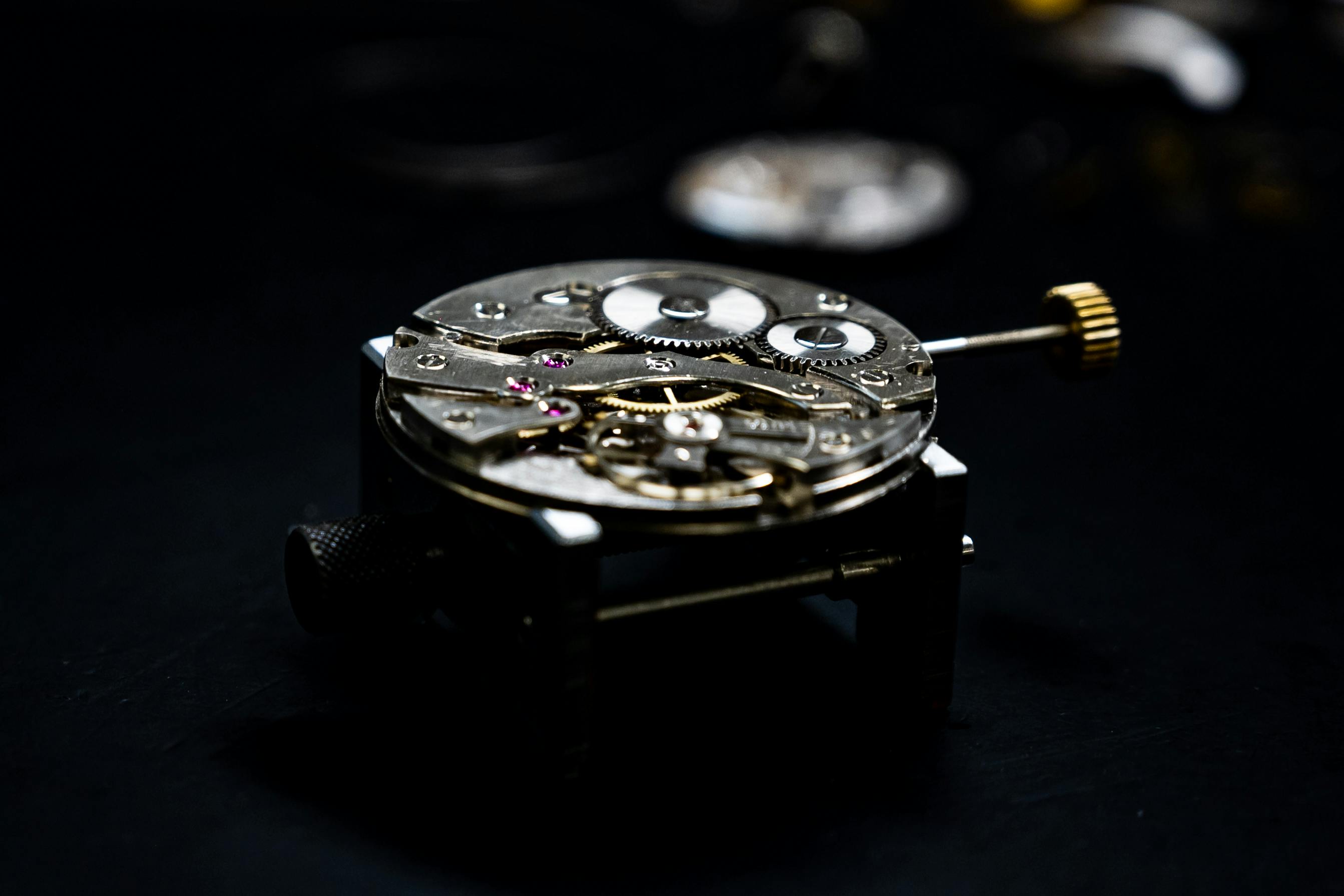
On movement parts — bridges, plates, rotors — look at the edges. Genuine Swiss movements have beveled (chamfered) edges that are polished smooth. This is hand-finished work that costs real money, and it's almost never replicated in aftermarket parts. The côtes de Genève (Geneva stripes) on genuine movements are even, parallel, and consistent. On fakes, they're usually too wide, too shallow, or just printed on.
For case parts, examine the brushing and polishing. Factory brushing has a consistent grain direction with even depth. Aftermarket cases often have inconsistent brushing or rough transitions between brushed and polished surfaces.
3. Know Your Source
This is honestly the most reliable method. Where did the part come from?
Authorized service centers are the gold standard — parts sourced from Rolex, Omega, or TAG Heuer service networks are guaranteed genuine. Some come in original labeled bags with part numbers.
Established dealers and collectors who have built a reputation over years are generally reliable. In the watch parts community, reputation is everything — one fake part can destroy decades of trust.
Random online marketplaces are where most fakes live. That "genuine Rolex crown" for €15 on a marketplace with no return policy? You already know the answer.
4. Price as an Indicator (But Not a Guarantee)
If a "genuine" Patek Philippe dial costs CHF 50, it's not genuine. Authentic parts from premium manufacturers hold their value. But the reverse isn't true — a high price doesn't automatically mean authenticity. Plenty of sellers charge genuine prices for aftermarket parts.
The safest approach: buy from dealers who will tell you honestly when a part is aftermarket, service replacement, or original. At ChronoShop, if we're not certain about provenance, we say so in the listing.
5. NOS vs. Used vs. Aftermarket — Know What You're Getting
NOS (New Old Stock): Original manufacturer parts that were produced but never installed. These are genuine parts, just old. They may show storage wear (light patina, aged lume) but are mechanically unused.
Used/Pre-owned: Parts removed from watches during service or disassembly. Genuine, but with signs of wear. Scratches, faded lume, worn plating — all normal for a part that lived in a watch for decades.
Service replacement: Parts installed by authorized service centers during maintenance. These are genuine manufacturer parts, sometimes from a different production era than the original watch.
Aftermarket: Third-party reproductions. These range from high-quality alternatives to cheap junk. They're not inherently bad — sometimes they're the only option for a discontinued part — but they should always be sold as aftermarket, never as genuine.
Our Approach
Every part on ChronoShop is photographed in detail and described honestly. If it's NOS, we say so. If it's used with signs of wear, we describe the condition. If we can't verify provenance with certainty, we note that too. We'd rather lose a sale than lose your trust.
Questions about a specific part? Reach out to us — we deal with these questions every day.