Understanding Watch Movements: Manual, Automatic & Quartz
The movement is the heart of every watch. Whether you're replacing one or simply want to understand what makes your timepiece tick, here's what you need to know about the three main types.
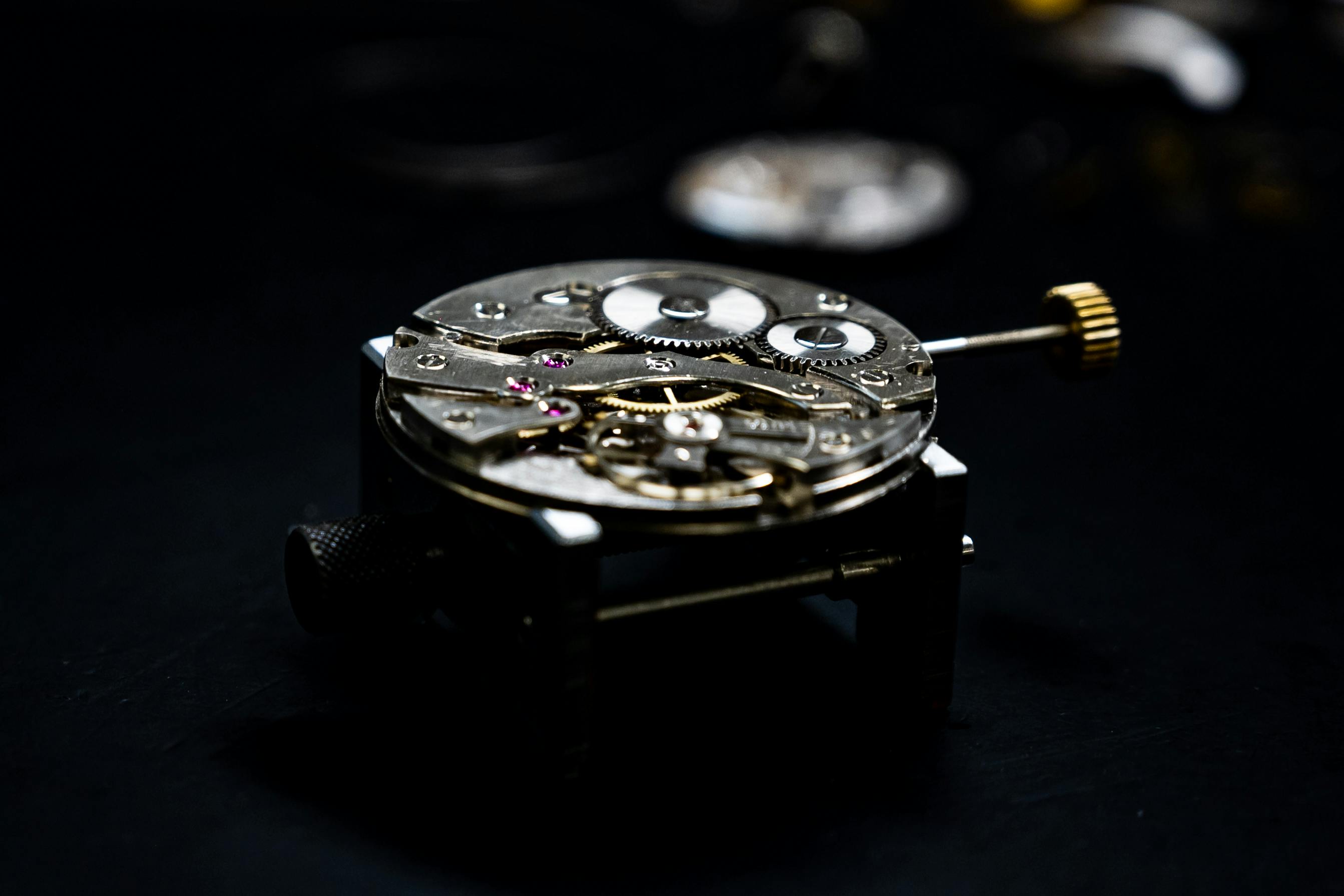
When someone says "movement" or "caliber," they're referring to the engine inside your watch — the mechanism that makes the hands move and the complications function. Understanding the differences between movement types is essential whether you're buying parts, commissioning a repair, or simply appreciating what's on your wrist.
Manual-Wind Movements
The oldest and purest form of mechanical watchmaking. A manual-wind movement requires you to turn the crown regularly (typically once a day) to tension the mainspring, which then slowly unwinds to power the watch.
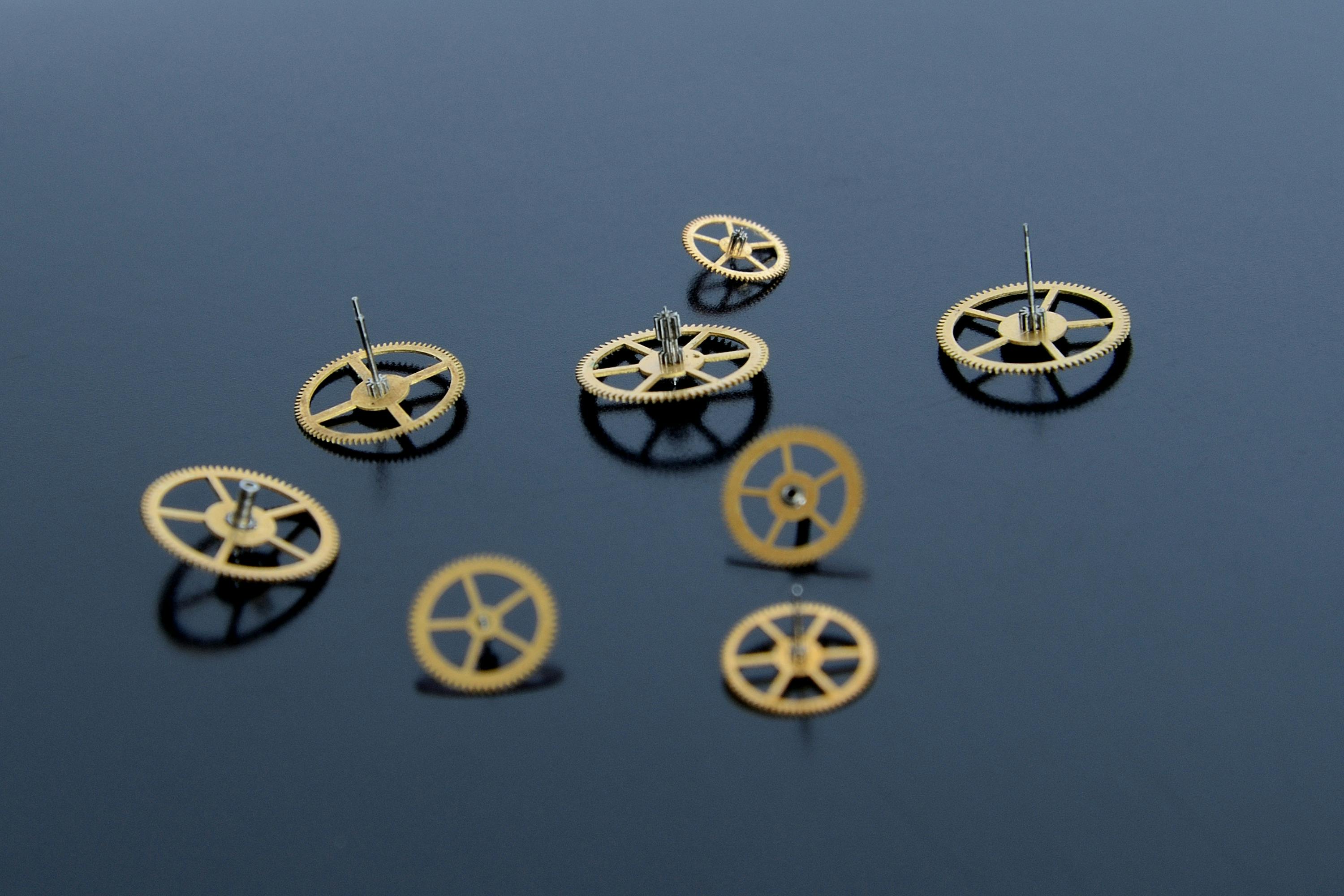
How it works: Crown → keyless works → mainspring barrel → gear train → escapement → balance wheel. Energy flows in one direction, from your fingers to the oscillating balance wheel that regulates timekeeping.
Common calibers: The ETA 6497 and 6498 (originally Unitas movements) are the workhorses of the manual-wind world. You'll find them in everything from Panerai homages to microbrands. Vintage collectors prize the Lemania 1873 (used in the Omega Speedmaster), the Valjoux 72 (found in early Rolex Daytonas), and the legendary Zenith El Primero — though the El Primero is technically automatic.
Parts we carry: Mainsprings, balance assemblies, crown and stem sets, click springs, and complete movements. If you're servicing a manual-wind watch, we likely have what you need.
Automatic (Self-Winding) Movements
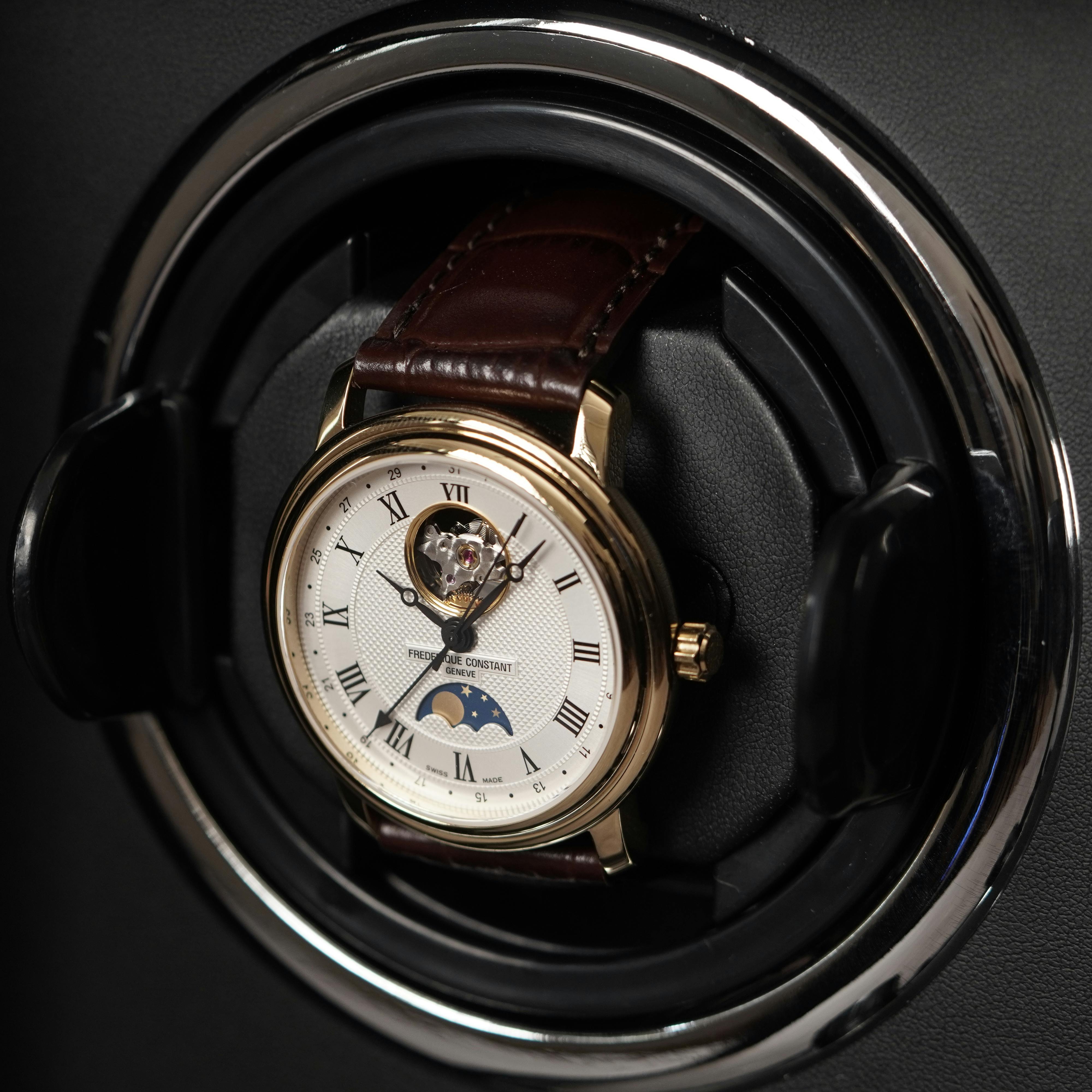
An automatic movement is essentially a manual-wind movement with an added rotor — a semicircular weight that spins as you move your wrist, winding the mainspring automatically. You never need to wind it manually (though most allow you to).
How it works: Everything from a manual movement, plus a rotor → reverser wheels (or equivalent) → mainspring barrel. The rotor converts wrist motion into rotational energy that tensions the mainspring.
Common calibers: The ETA 2824-2 powers more Swiss watches than probably any other movement — it's reliable, accurate, and parts are readily available. The Sellita SW200 is its near-identical alternative. At the luxury end, Rolex's caliber 3135 (and its successor 3235) and the Omega Co-Axial calibers represent the pinnacle of automatic movement engineering.
Parts we carry: Rotors, rotor bearings, reverser wheels, complete automatic modules, plus all the parts common to manual movements. Rotor replacements are among our most-requested items.
Quartz Movements
Quartz movements use a battery-powered oscillating quartz crystal to keep time. They're significantly more accurate than mechanical movements (typically ±15 seconds per month vs. ±5 seconds per day for a good mechanical).
How it works: Battery → integrated circuit → quartz crystal oscillating at 32,768 Hz → stepper motor → gear train → hands. The crystal's oscillation frequency is divided down to produce a precise one-second pulse.
Common calibers: The Miyota 2035 and Ronda 505 are found in countless fashion watches. The ETA 955.112 and 955.412 are Swiss quartz standards. For high-end quartz, the Breitling SuperQuartz and Grand Seiko 9F series represent the pinnacle.
Parts we carry: Complete quartz movements, battery clips, circuit boards, coils, and stepper motors. We also stock batteries (though these are available everywhere) and stem/crown assemblies for quartz-specific case configurations.
Which Parts Are Interchangeable?
This is the question we get asked most often. The short answer: it depends entirely on the specific calibers involved.
Within the same caliber family (e.g., ETA 2824-2 and its variants like the 2834-2), many parts are interchangeable. But between different families — even from the same manufacturer — compatibility drops to near zero. A mainspring from an ETA 2892 won't fit an ETA 2824.
When in doubt, ask us. We deal with compatibility questions daily and we're always honest about what works and what doesn't.