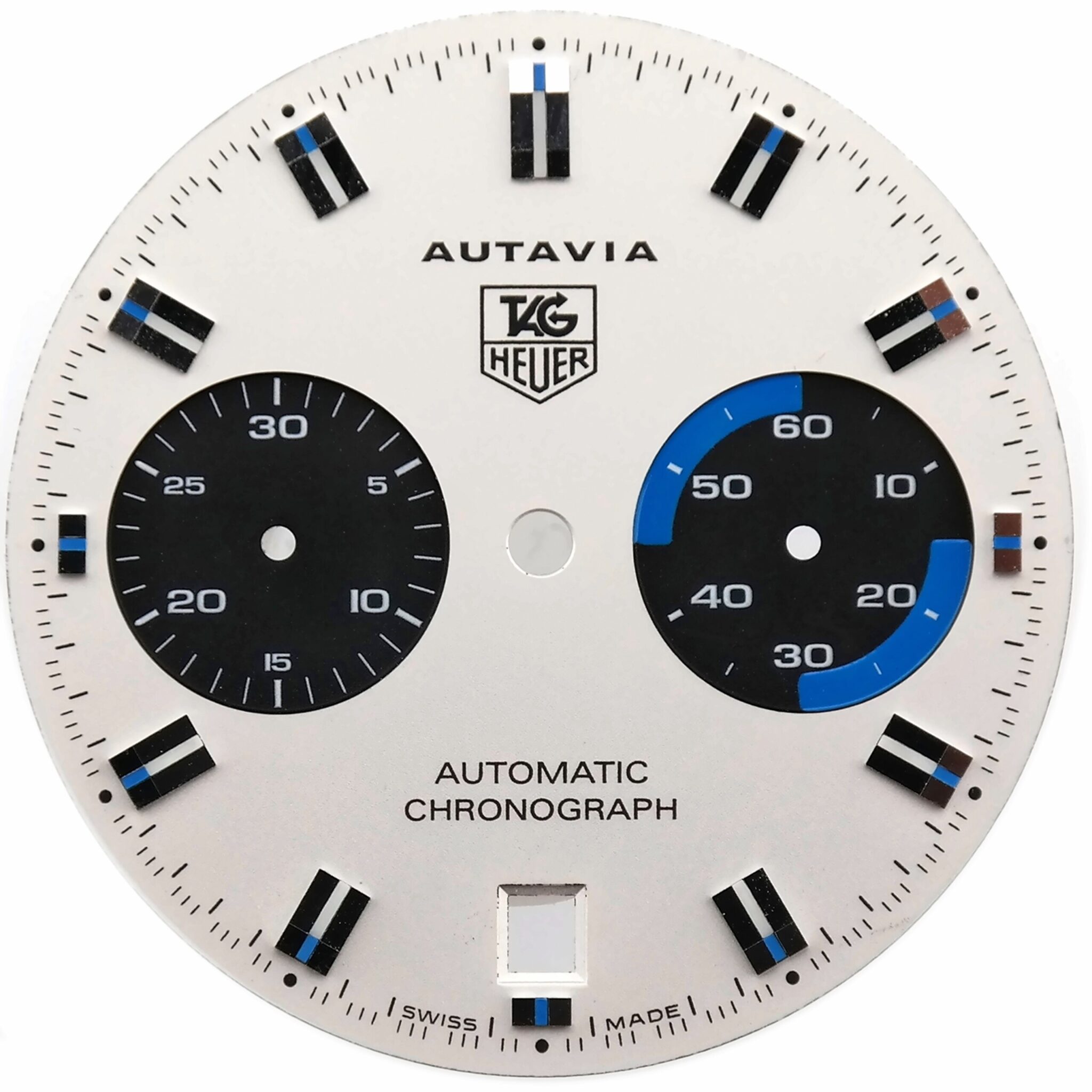
TAG Heuer Automatic Chronograph Watch Movement Calibre 1969
Overview
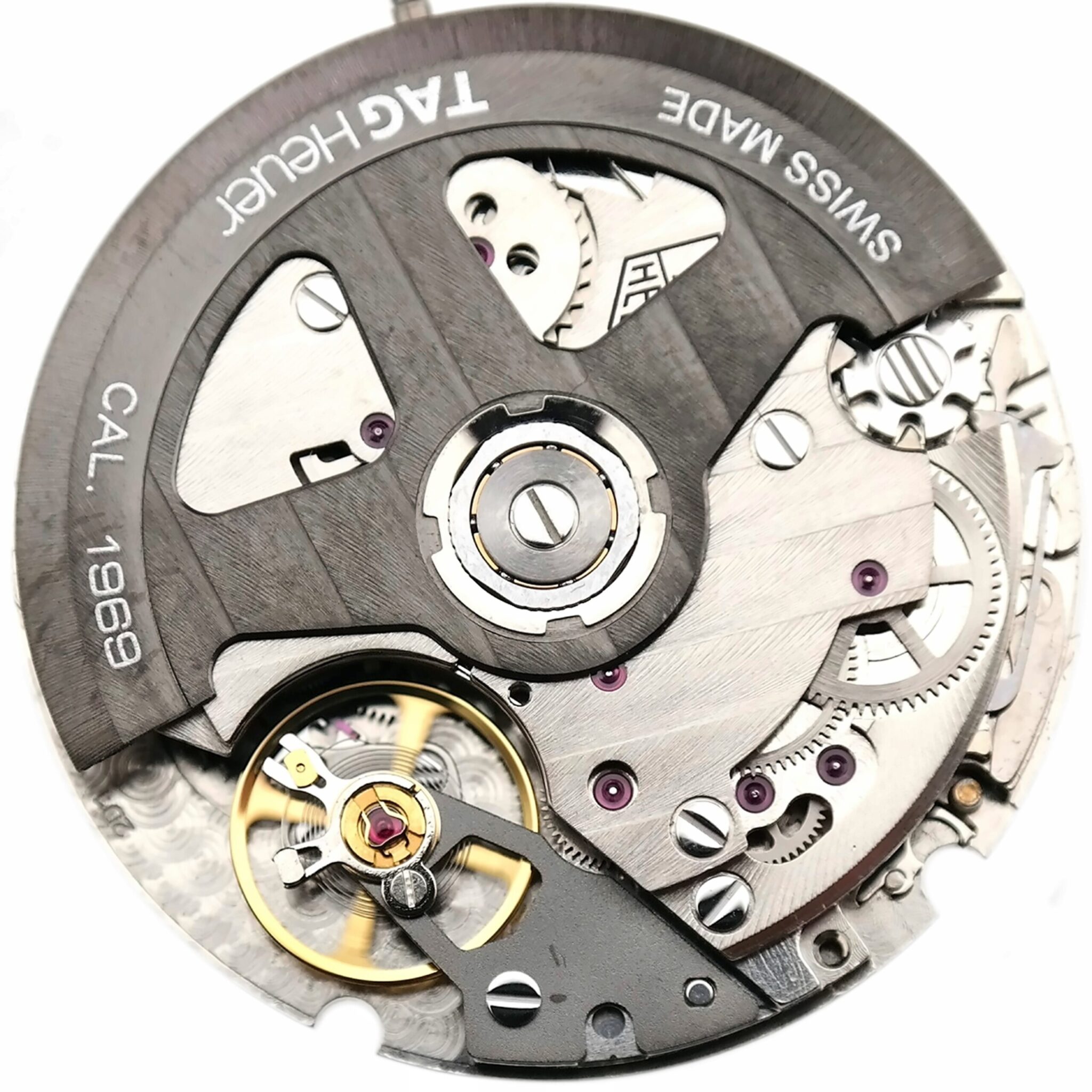
The Calibre 1969 is TAG Heuer’s first fully in-house automatic chronograph movement, developed as a derivative of the Calibre 1887. Introduced in 2012, it represents a milestone in TAG Heuer’s vertical integration, moving away from modified ETA or Sellita bases to a proprietary design. This movement features a vertical-clutch system—a hallmark of high-end chronographs—ensuring smooth engagement and reduced wear compared to lateral-clutch mechanisms. The Calibre 1969 was primarily used in TAG Heuer’s Carrera and Monaco collections, where its 4 Hz frequency and 80-hour power reserve delivered competitive performance for its era.
This is a new-old-stock (NOS) movement, meaning it has never been installed in a watch case or subjected to prolonged operation. While the movement is functional, it has not undergone precision testing or regulation. As with any unused or vintage movement, a full service—including cleaning, oiling, and timing adjustments—is strongly recommended before use. The movement is sold as a standalone unit, without additional components such as a rotor, setting lever, or case-specific parts unless visible in the accompanying photographs.
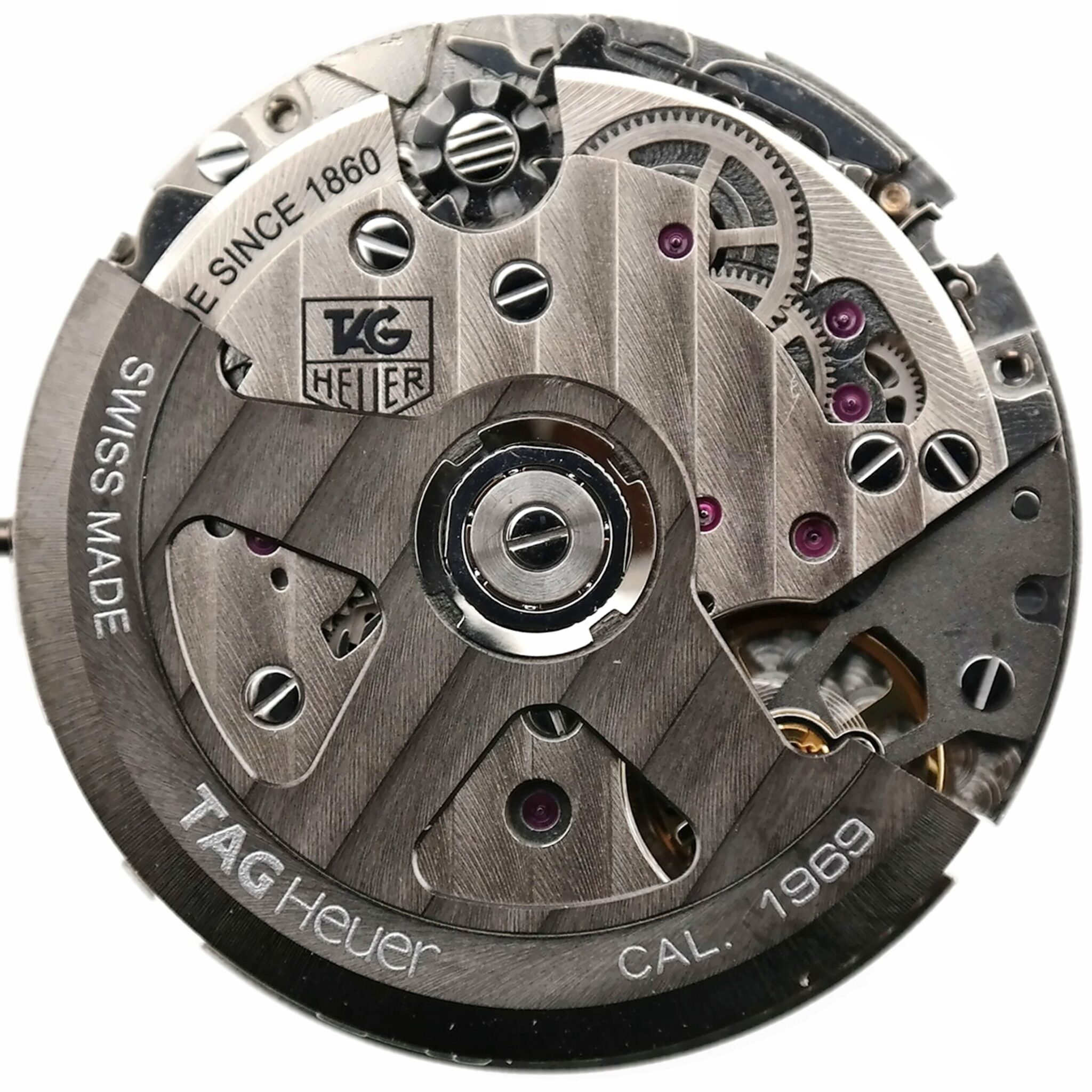
The condition is graded **Excellent** in our Condition Grading Scale below, with no visible signs of corrosion, damage, or unauthorized modifications. The “Côtes de Genève” finish on the oscillating mass and the engraved markings remain crisp, consistent with TAG Heuer’s factory standards. This movement is intended for professional watchmakers or collectors with the technical expertise to service and integrate it into a compatible TAG Heuer case.
Specifications
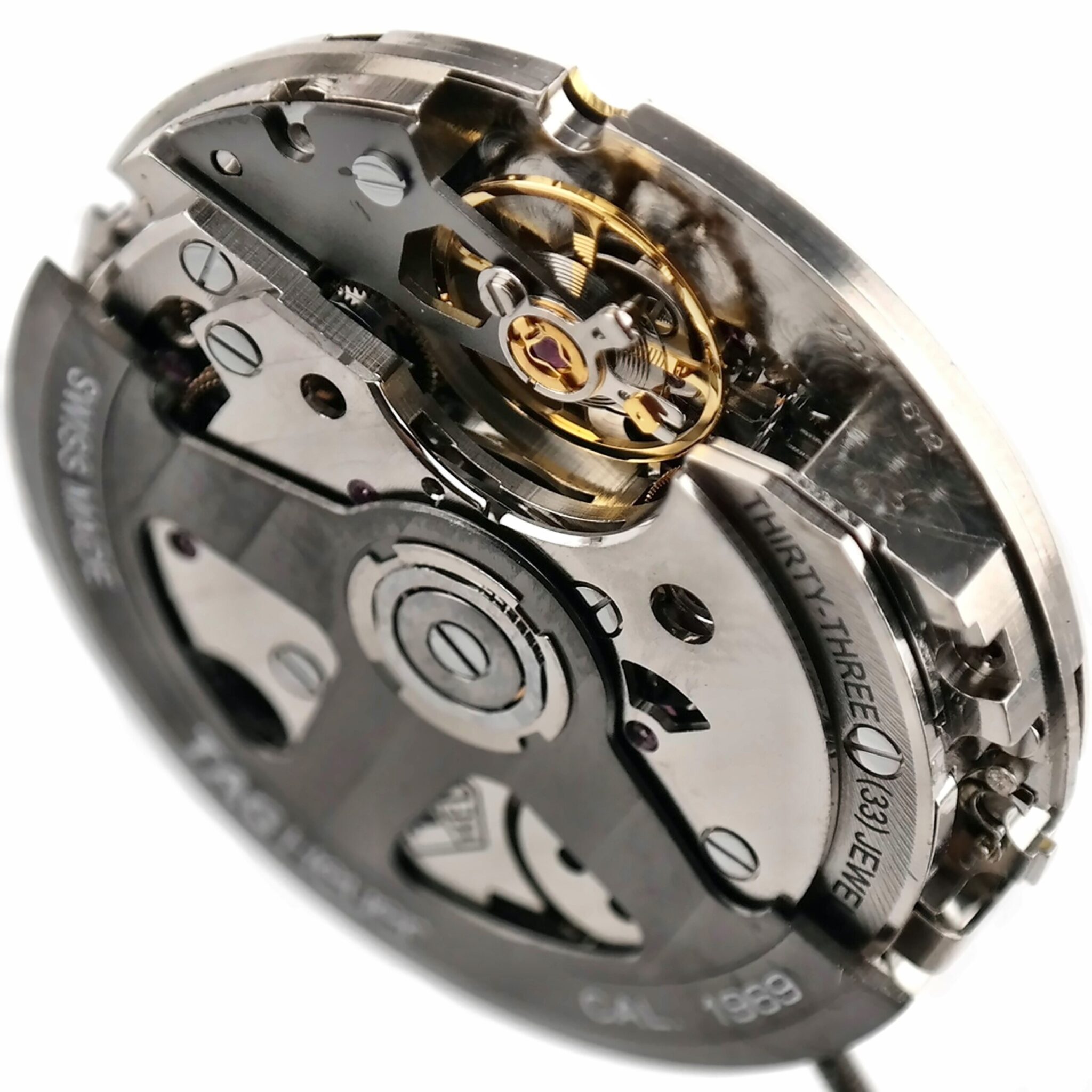
Official reference: TAG Heuer Calibre 1969. Swiss Made automatic chronograph movement with vertical-clutch system. Diameter of 29.3 mm (13”’ lignes) and thickness of 6.5 mm. 33 synthetic rubies for reduced friction. Balance frequency of 28,800 vibrations per hour (4 Hz), providing a timekeeping resolution of 1/8th of a second for the chronograph function.
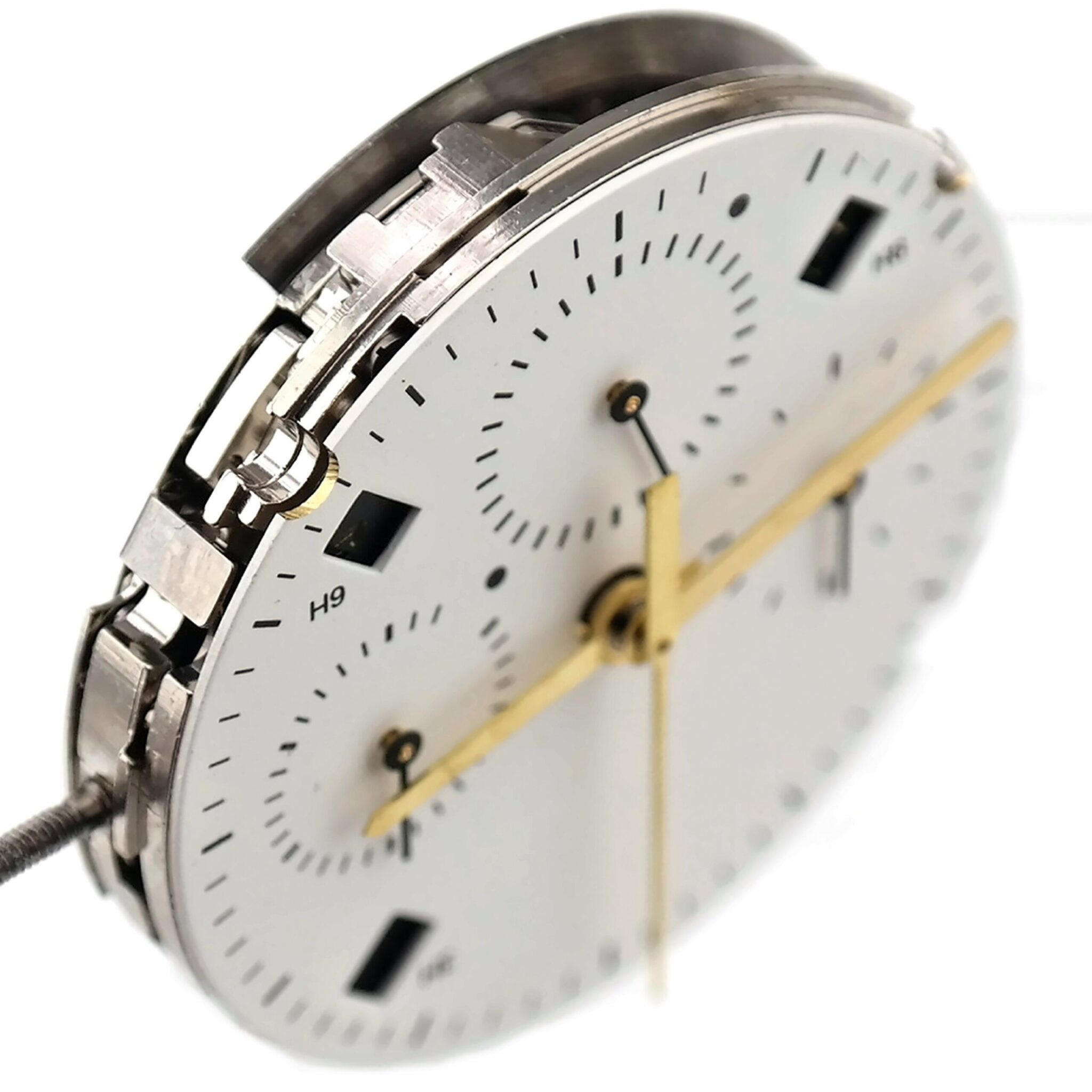
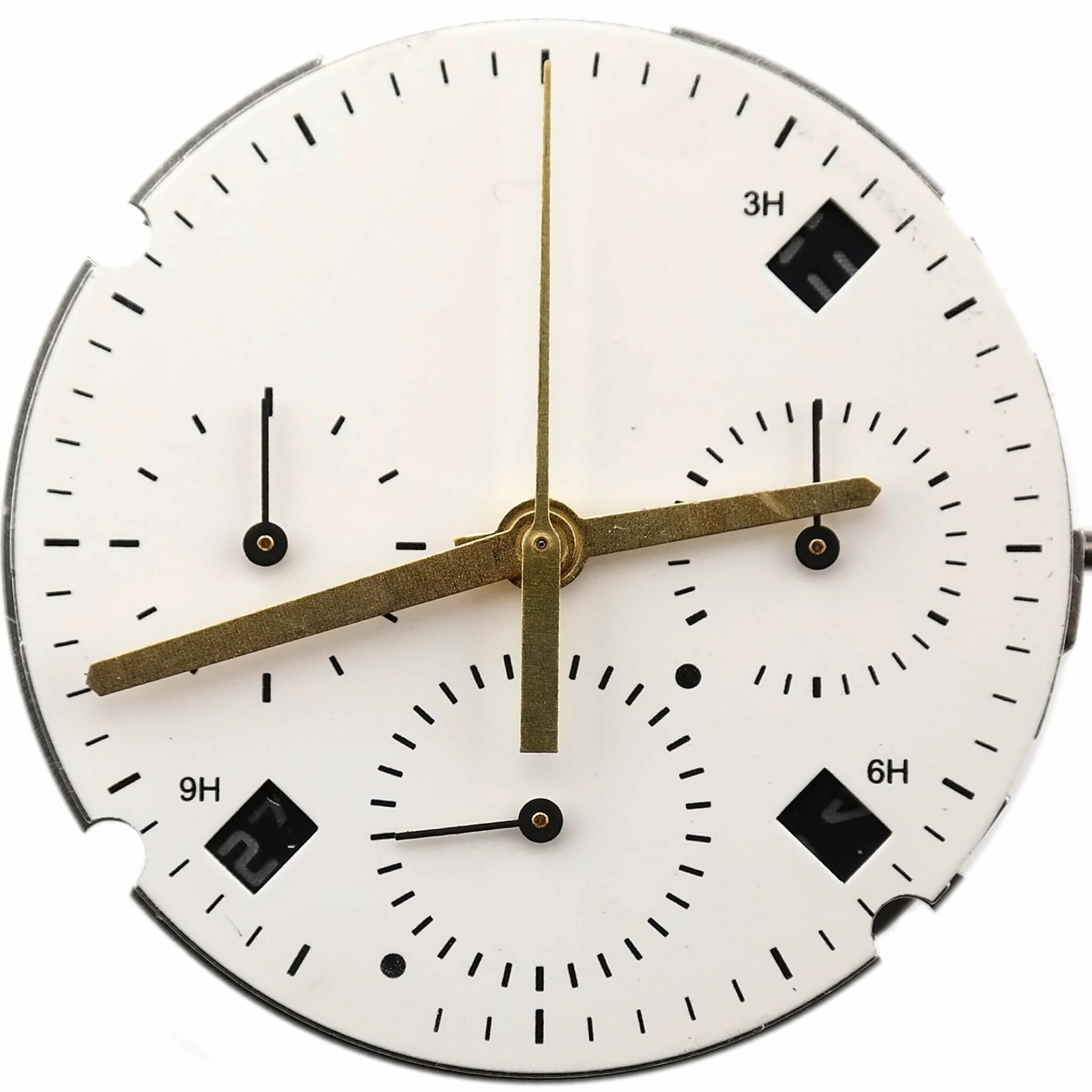
Power reserve of approximately 70–80 hours in timekeeping mode and ~60 hours when the chronograph is active. Time adjustment deviation after 24 hours ranges from -4 to +6 seconds, meeting TAG Heuer’s internal precision standards for unregulated movements. Rapid date correction via the crown in position 2. Chronograph functions include a central sweep seconds hand, a 30-minute counter at 3 o’clock, and a 12-hour counter at 9 o’clock. Small seconds subdial at 6 o’clock.
The oscillating mass features a “Côtes de Genève” decoration and is engraved with the markings: TAG Heuer — Cal. 1969 — Swiss Made.
Compatibility
Designed for use in TAG Heuer Carrera and Monaco models from the early 2010s that originally housed the Calibre 1969. Compatible cases must accommodate a 29.3 mm (13”’ lignes) movement with a 6.5 mm height. The movement requires a case with chronograph pushers at 2 o’clock and 4 o’clock, as well as a crown at 3 o’clock for time setting and date correction. Not compatible with TAG Heuer models using ETA or Sellita-based movements without modification.
Due to the proprietary vertical-clutch design, this movement cannot be directly swapped into cases intended for lateral-clutch chronographs (e.g., Valjoux 7750-based models) without extensive case and dial modifications. The date wheel is positioned for display at 6 o’clock, requiring a corresponding aperture in the dial. Hands must be compatible with the movement’s cannon pinion and chronograph hammer dimensions.
Notes
- The article is sold “AS IS”. Please read our Warranty Policy before purchasing.
- Any parts not explicitly mentioned in this description or not visible in the accompanying photographs are not included.
- Colors may appear slightly different across various screens and devices so we cannot guarantee an exact screen-to-reality color match.
The Calibre 1969 remains one of TAG Heuer’s most technically ambitious in-house movements, offering a balance of high-frequency precision and extended power reserve in a compact package.